
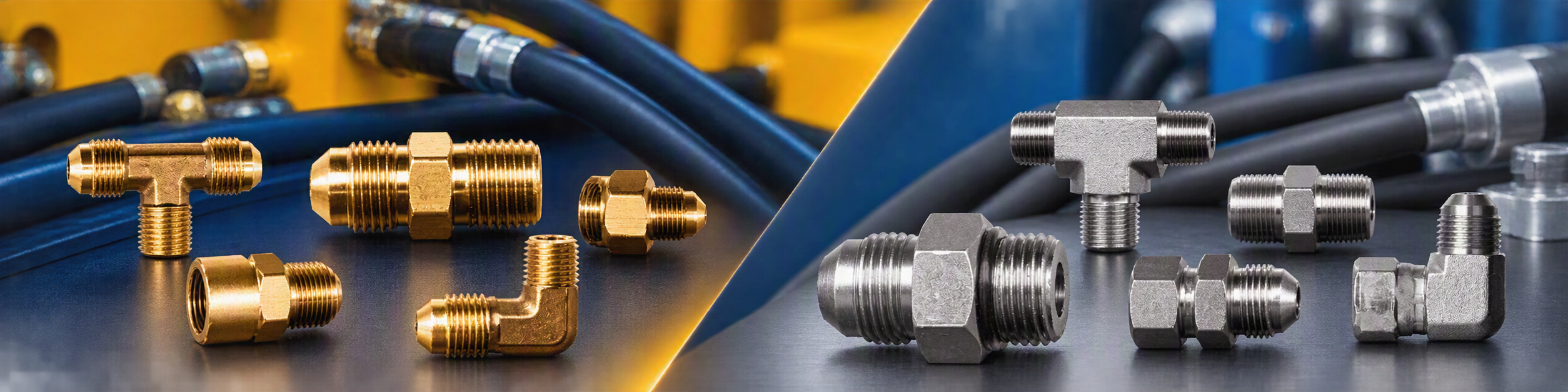
JIC vs. SAE Fittings: What's the Difference?
When it comes to hydraulic, gas and fluid transfer systems, choosing the right fitting is essential for performance, safety, and compatibility. Among the most common fittings in the industry are JIC (Joint Industry Council) and SAE (Society of Automotive Engineers) fittings. While they may look similar at first glance, there are key differences you should understand before making a selection.
At Fairview, we’re committed to helping you make the best choices for your hydraulic systems. Let’s break down the similarities and differences between JIC and SAE fittings so you can choose with confidence.
What Are JIC Fittings?
JIC fittings were first developed during WWII by the military for high-pressure systems and adhere to the SAE J514 standard. They are widely used in fluid power applications across various industries, including agriculture, construction, and automotive. They are characterized by:
· 37° flare seating surface
· Metal-to-metal seal
· Straight threads (UNF/UN)
These fittings are known for their leak-proof seal when used with compatible tubing, thanks to the precision of the 37° flare.
What Are SAE Fittings?
SAE fittings typically refer to fittings that follow SAE J512 standards. They are found in lower-pressure applications such as automotive fuel systems, propane, refrigeration and are identified by:
· 45° flare seating surface
· Also uses straight threads
Due to the 45° flare, SAE fittings are not interchangeable with JIC fittings, even though their thread sizes may match on some sizes (-4, -5, -8 & -10) unless the mating female adapter has a dual/hybrid seat (37/45 degree hybrid seat)
Key Differences Between JIC and SAE Fittings
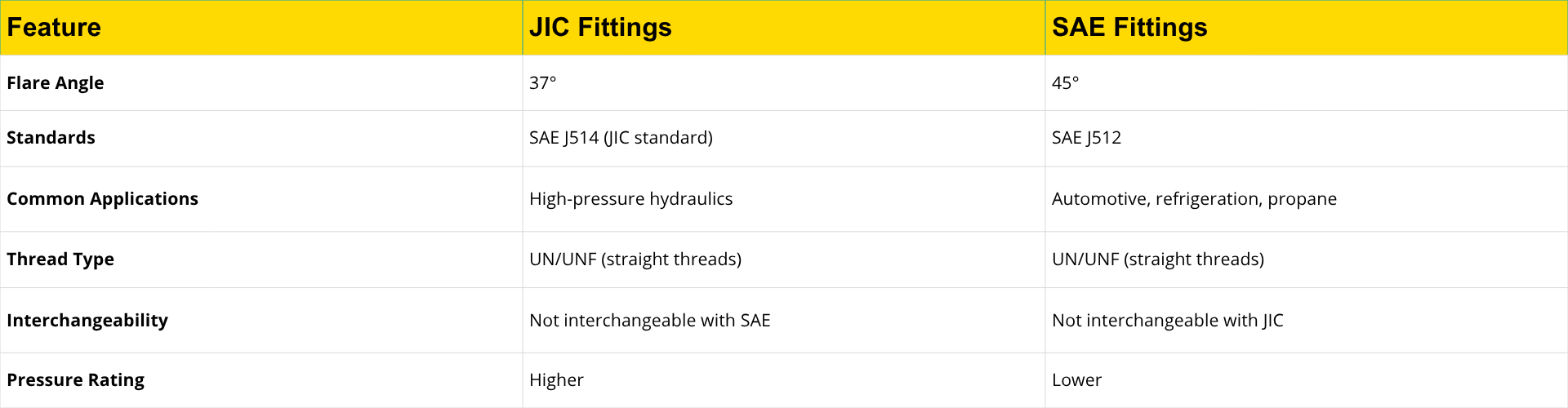
Feature | JIC Fittings | SAE Fittings |
Flare Angle | 37° | 45° |
Standards | SAE J514 (JIC standard) | SAE J512 |
Common Applications | High-pressure hydraulics | Automotive, refrigeration, propane |
Thread Type | UN/UNF (straight threads) | UN/UNF (straight threads) |
Interchangeability | Not interchangeable with SAE | Not interchangeable with JIC |
Pressure Rating | Higher | Lower |
Why It Matters
Using the wrong fitting can result in:
· Leaks
· System failure
· Safety hazards
· Increased maintenance costs
Because JIC and SAE fittings are visually similar and often share thread sizes, it’s easy to confuse them. However, mismatching flare angles (37° vs. 45°) will prevent proper sealing and could lead to performance issues or safety risks.
How to Tell the Difference
When inspecting a fitting:
· Use a flare gauge to check the angle
· If you know the Fairview part number, check the seat angle in the Fairview catalogue.
· Consult with a knowledgeable fittings supplier (like us!)
Need Help Identifying or Sourcing the Right Fittings?
At Fairview, we stock a full range of both JIC and SAE fittings and can help you identify exactly what you need. Whether you're designing a new hydraulic system or replacing existing components, our experts are here to guide you every step of the way.
Contact us today or explore our product catalogue to find the perfect fit for your application.
When it comes to hydraulic, gas and fluid transfer systems, choosing the right fitting is essential for performance, safety, and compatibility. Among the most common fittings in the industry are JIC (Joint Industry Council) and SAE (Society of Automotive Engineers) fittings. While they may look similar at first glance, there are key differences you should understand before making a selection.
At Fairview, we’re committed to helping you make the best choices for your hydraulic systems. Let’s break down the similarities and differences between JIC and SAE fittings so you can choose with confidence.
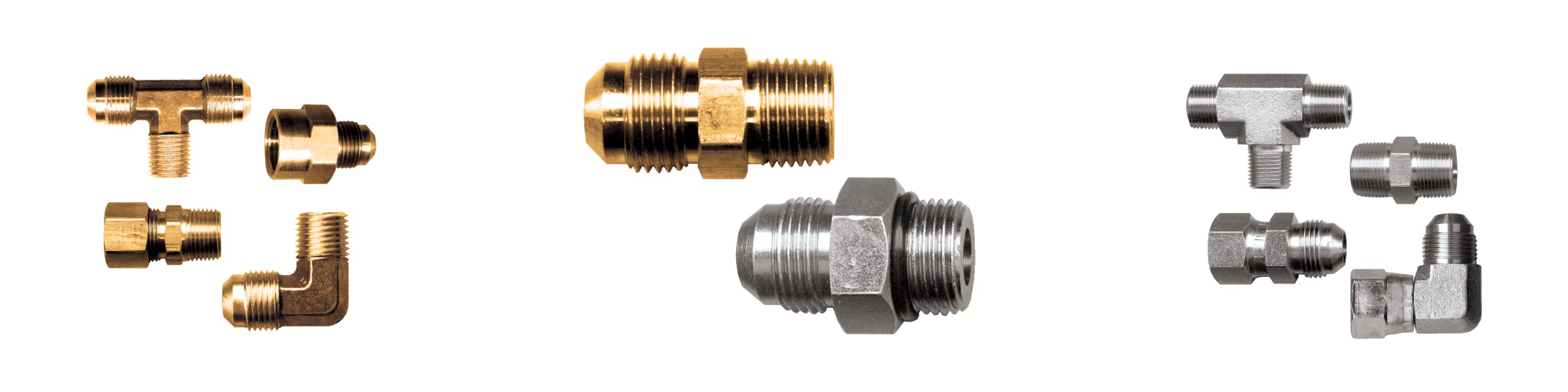
What Are JIC Fittings?
JIC fittings were first developed during WWII by the military for high-pressure systems and adhere to the SAE J514 standard. They are widely used in fluid power applications across various industries, including agriculture, construction, and automotive. They are characterized by:
- 37° flare seating surface
- Metal-to-metal seal
- Straight threads (UNF/UN)
These fittings are known for their leak-proof seal when used with compatible tubing, thanks to the precision of the 37° flare.
What Are SAE Fittings?
SAE fittings typically refer to fittings that follow SAE J512 standards. They are found in lower-pressure applications such as automotive fuel systems, propane, refrigeration and are identified by:
- 45° flare seating surface
- Also uses straight threads
Due to the 45° flare, SAE fittings are not interchangeable with JIC fittings, even though their thread sizes may match on some sizes (-4, -5, -8 & -10) unless the mating female adapter has a dual/hybrid seat (37/45 degree hybrid seat)
Key Differences Between JIC and S.A.E Fittings
Why It Matters?
Using the wrong fitting can result in:
- Leaks
- System failure
- Safety hazards
- Increased maintenance costs
Because JIC and SAE fittings are visually similar and often share thread sizes, it’s easy to confuse them. However, mismatching flare angles (37° vs. 45°) will prevent proper sealing and could lead to performance issues or safety risks.
How to Tell the Difference?
When inspecting a fitting:
- Use a flare gauge to check the angle
- If you know the Fairview part number, check the seat angle in the Fairview catalogue.
- Consult with a knowledgeable fittings supplier (like us!)
Need Help Identifying or Sourcing the Right Fittings?
At Fairview, we stock a full range of both JIC and SAE fittings and can help you identify exactly what you need. Whether you're designing a new hydraulic system or replacing existing components, our experts are here to guide you every step of the way.
Contact us today or explore our product catalogue to find the perfect fit for your application.


