
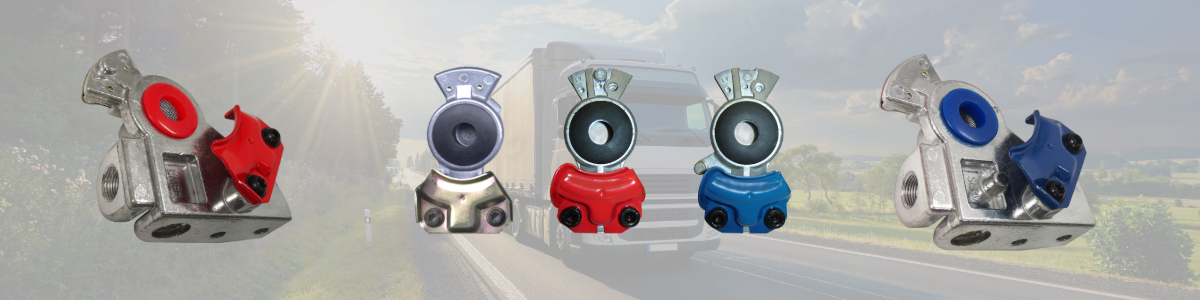
Understanding Glad Hand Couplings: Service, Emergency, and Universal
If you work with tractor-trailers, air brake systems, or heavy-duty trucks, you've almost certainly handled a glad hand coupling — even if you didn't know it by name. These simple, rugged fittings connect the air brake lines between a tractor and trailer and getting the right type matters for safety and compliance. Here's a breakdown of what glad hands are, how Service and Emergency glad hands differ, and where Universal glad hands fit in.
What Is a Glad Hand Coupling?
A glad hand is a coupling device that connects air brake hoses between a truck (or tractor) and its trailer. The design dates back over a century, and the name comes from the way the two halves "shake hands" — the coupling faces rotate and lock together with a quick quarter-turn motion, held in place by a rubber seal and a lug-and-groove mechanism.
Glad hands meet SAE J318 standards and are typically made of cast iron, steel, or aluminium, depending on the application and weight requirements. Every combination vehicle running air brakes needs at least two: one for the service line and one for the emergency line.
Service Glad Hands
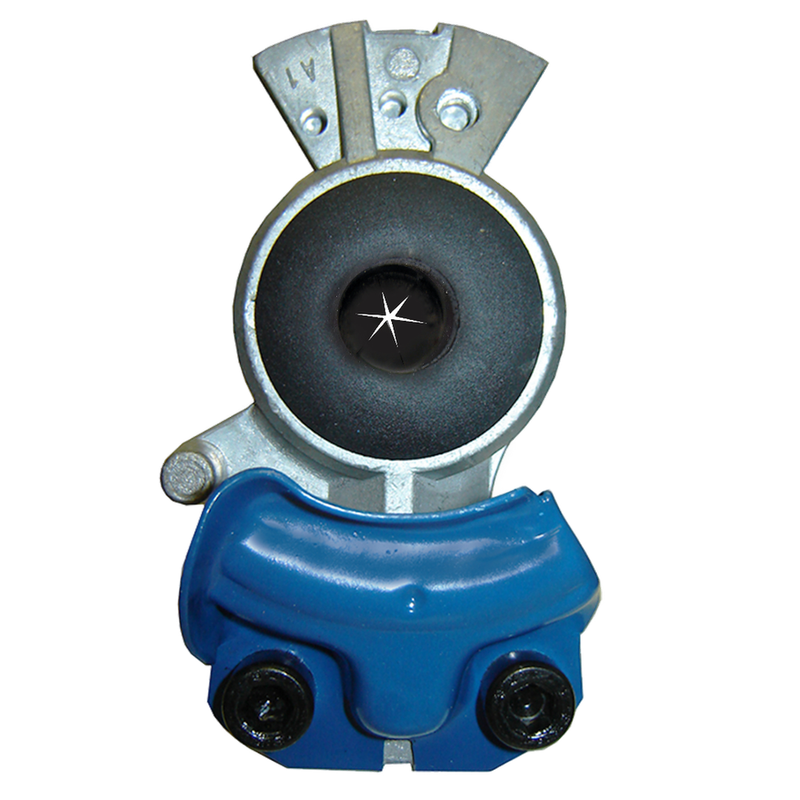
The service glad hand connects the service air line, which carries the air pressure the driver uses to apply the trailer brakes during normal driving. When the driver presses the brake pedal, air pressure travels through this line to activate the trailer's brake chambers.
Service glad hands are colour-coded blue and typically stamped or marked with an "S" for easy identification. This colour coding is standard across the industry, so a driver or technician can confirm the correct connection at a glance without tracing the line back to the source.
Emergency Glad Hands
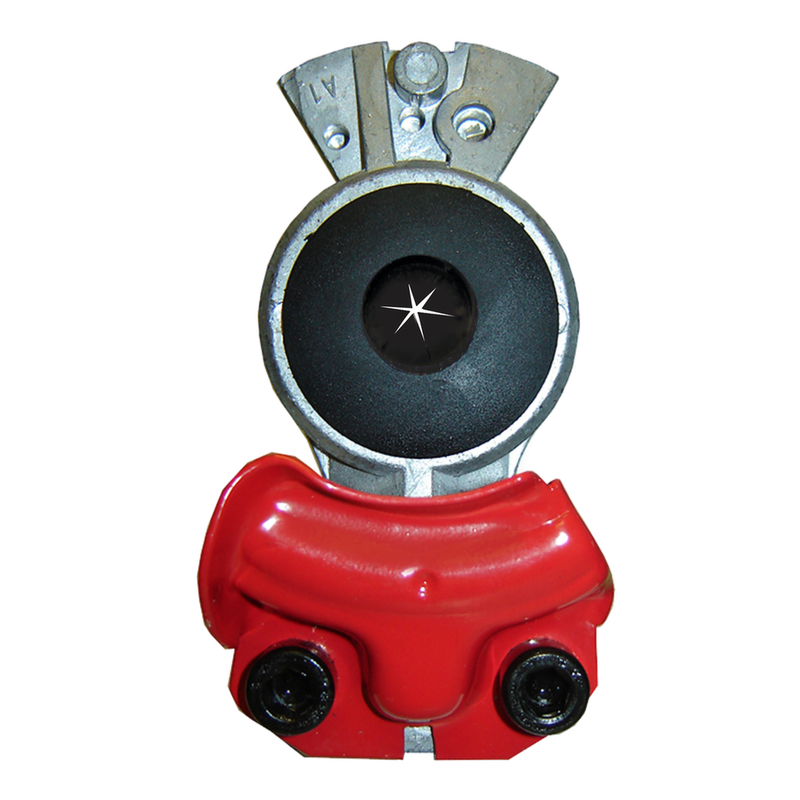
The emergency glad hand connects the emergency (or supply) air line. This line does two jobs: it charges the trailer's air tanks for normal operation, and it serves as the fail-safe brake system. If the trailer becomes disconnected from the tractor, or if air pressure in this line drops too low, the trailer's spring brakes automatically engage, bringing it to a stop even without driver input.
Emergency glad hands are colour-coded red and stamped with an "E." Because a failure or mismatch on this line has direct safety consequences, correctly identifying and connecting the emergency glad hand is one of the most important pre-trip checks a driver performs.
Universal Glad Hands
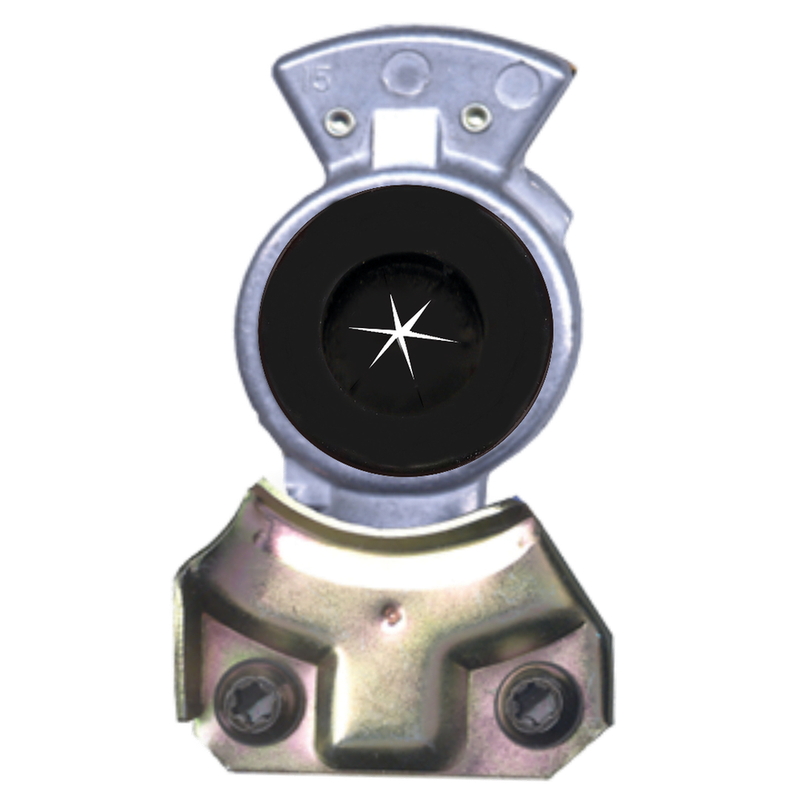
Universal glad hands solve a practical problem: not every tractor-trailer combination uses matching glad hand styles, and older or non-standard equipment can make a proper connection difficult. A universal glad hand has a coupling face that mates with either a standard service or emergency glad hand, regardless of minor design variations between manufacturers or vehicle ages.
This makes universal glad hands a useful option for fleets running mixed or older equipment, for shops stocking replacement parts, or as a dependable spare to keep on hand for roadside repairs. They don't replace the need for correct colour coding and markings on the tractor and trailer sides, but they add flexibility when connecting equipment that might not otherwise couple cleanly.
Other Glad Hand Variations Worth Knowing
Beyond the standard service and emergency types, a few other glad hand styles show up in the field:
- Valved glad hands include a built-in shutoff valve, letting you disconnect an air line without bleeding down the whole system — useful for maintenance or when uncoupling on the fly.
- Swing glad hands are mounted on a swivelling arm, which reduces strain on the airline and coupling when hooking up trailers at odd angles.
- Glad hand grips (sometimes called glad hand seals or gaskets) are the rubber seals inside the coupling face. These wear out over time and are a common point of air leaks, so they're worth checking during routine inspections.
Why Colour Coding and Markings Matter
Mixing up the service and emergency lines isn't just a minor mistake; it can compromise the trailer's braking response and fail-safe function. That's why the red/blue E/S system exists: it lets drivers make a fast, reliable visual check during coupling, even in low light or bad weather, without needing to test each line electronically or mechanically.
Final Thoughts
Service and emergency glad hands aren't interchangeable by function, even though they share the same basic coupling design — one governs everyday braking, the other is the trailer's safety net if things go wrong. Universal glad hands bridge compatibility gaps between different equipment, but they don't replace the standard colour-coded system drivers rely on for quick, safe inspections.
Whether you're outfitting a new trailer, replacing a worn coupling, or stocking spares for your fleet, understanding these distinctions helps ensure your air brake system connects correctly—and stays reliable—every time.


