
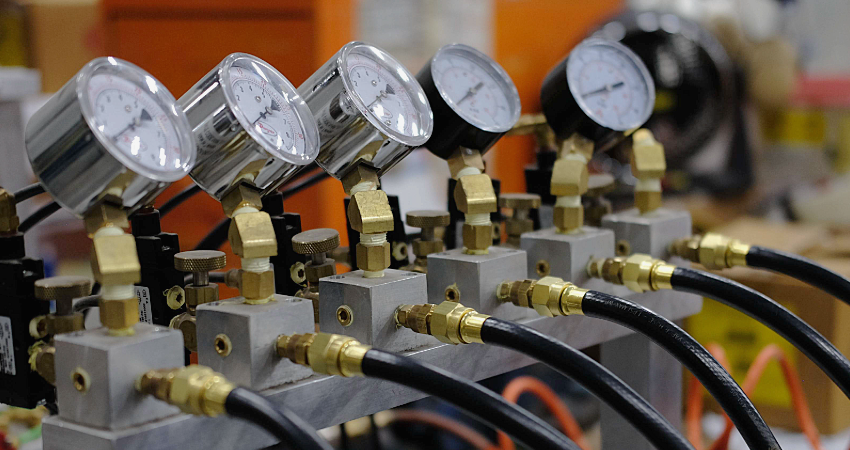
All You Need to Know About Gauge Selection
How to Correctly Select and Install a Pressure Gauge
When it comes to maintaining safe and efficient operations in fluid systems, choosing the right pressure gauge is critical. Whether you’re working with hydraulics, pneumatics, or industrial processing systems, a properly selected and installed pressure gauge helps monitor system pressure, avoid equipment failure, and maintain compliance with safety standards.
As a trusted provider of fittings and pressure gauges—including liquid-filled (glycerin or silicone) and dry pressure gauges—we’re here to walk you through the best practices for selecting and installing a gauge that will perform reliably in your application.
Understanding the Types of Pressure Gauges
Before diving into the selection process, it’s important to understand the two main types of pressure gauges:
1. Dry Pressure Gauges
· Best for: Indoor, vibration-free environments.
· Benefits: Cost-effective and ideal for general-purpose applications. (-40°C to 60°C applications)
· Limitations: Susceptible to internal condensation and needle flutter in high-vibration settings.
2. Liquid-Filled Pressure Gauges (Glycerin or Silicone)
· Best for: Harsh environments with vibration, pulsation, or extreme temperatures.
· Benefits: Damping of needle movement, protection against moisture, and extended service life.
· Fill Type:
o Glycerin: Suitable for moderate temperature environments (-20°C to 65°C applications).
o Silicone: Performs better in extreme temperatures (e.g., -60°C to +200°C), making it ideal for outdoor or cold environments.
o Equalizer Pressure Gauge: Dry gauge that has a dampening movement that eliminates pointer flutter. (-50°C to +93°C applications)
How to Select the Right Pressure Gauge
When selecting a pressure gauge, consider the following six key factors:
1. Pressure Range
· Choose a gauge with a pressure range approximately 2x your normal operating pressure.
· This prevents over-ranging and ensures long-term accuracy and safety.
2. Dial Size
· Larger dials are easier to read from a distance.
· Choose based on your system layout and how frequently readings are taken.
3. Connection Type and Size
· Common Fairview sizes: 1/8”, 1/4”, 1/2” NPT (National Pipe Thread).
· Connection orientation: Bottom mount or back mount, depending on panel design or system layout.
4. Accuracy Grade
· General industrial use: 2-3% full-scale accuracy is typically sufficient.
· Higher-precision applications may require 1.5% or better.
5. Operating Environment
· Dry gauge for stable indoor environments.
· Liquid-filled gauge for high-vibration, outdoor, or corrosive environments (consider glycerin vs. silicone depending on temperature exposure).
6. Material Compatibility
· Ensure wetted parts (typically the socket and Bourdon tube) are compatible with the media.
· Brass for water, air, and non-corrosive fluids.
· Stainless steel for corrosive fluids or harsher environments.
Best Practices for Installing a Pressure Gauge
Proper installation is just as important as selecting the right gauge. Here are some guidelines:
1. Use Thread Sealant Sparingly
· Apply thread sealant (e.g., PTFE tape) carefully to avoid over-application, which can damage the gauge or contaminate the system.
· Do not allow sealant to enter the pressure port.
2. Hand-Tighten, Then Wrench
· Start threading by hand to avoid cross-threading.
· Use a wrench to tighten only at the hex portion of the fitting—never twist the gauge body.
3. Install in Upright Position
· Most gauges are calibrated to be read vertically. Avoid tilting unless the gauge is designed for that orientation.
4. Avoid Overpressure
· Use a snubber or pressure restrictor if pressure spikes are expected, especially in systems with rapid pressure fluctuations.
5. Vent the Liquid-Filled Gauge
· Most liquid-filled gauges come with a rubber plug at the top. If installed in high-temperature areas, open the vent plug to equalize pressure and prevent fogging or distortion of the reading.
6. Protect Against Vibration
· For high-vibration installations, consider remote mounting with a flexible capillary or using a gauge with an integrated dampening system.
Final Thoughts
Selecting and installing a pressure gauge correctly can save you time, money, and prevent costly system failures. Whether you’re working on a new installation or upgrading existing equipment, our wide selection of dry and liquid-filled gauges (glycerin and silicone) and industrial-grade fittings ensures a reliable and safe setup tailored to your application.
Need help choosing the right gauge? Our team is here to help. Contact us today or explore our range of gauges and fittings designed for durability and performance.
Stay safe. Stay precise. Choose the right gauge.
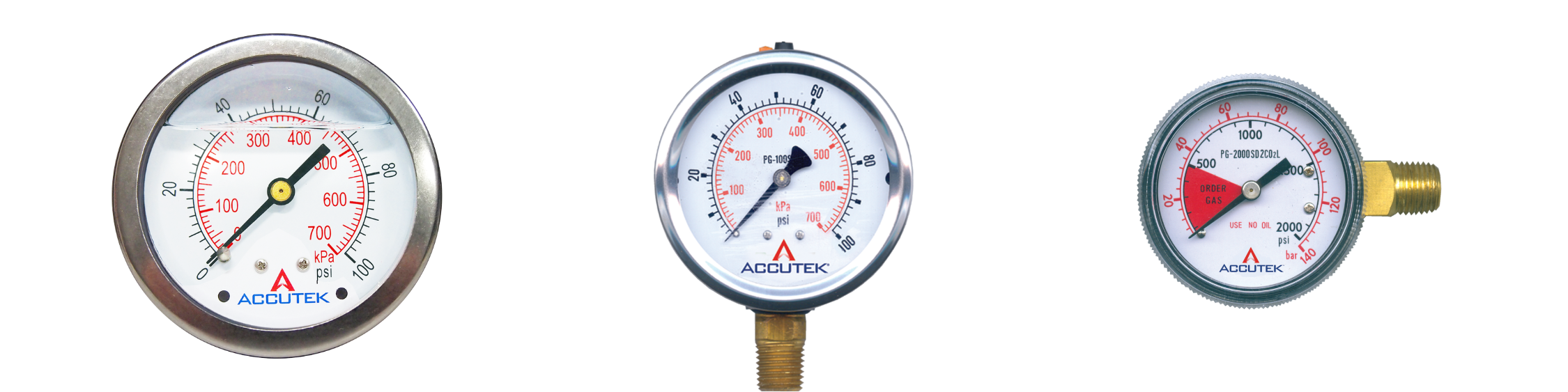
How to Correctly Select and Install a Pressure Gauge
Understanding he Types of Pressure Gauge
 Dry Pressure Gauges
- Best for: Indoor, vibration-free environments.
- Benefits: Cost-effective and ideal for general-purpose applications. (-40°C to 60°C applications)
- Limitations: Susceptible to internal condensation and needle flutter in high-vibration settings.
 Liquid-Filled Pressure Gauges (Glycerin or Silicone)
- Best for: Harsh environments with vibration, pulsation, or extreme temperatures.
- Benefits: Damping of needle movement, protection against moisture, and extended service life.
- Fill Type:
- Glycerin: Suitable for moderate temperature environments (-20°C to 65°C applications).
- Silicone: Performs better in extreme temperatures (e.g., -60°C to +200°C), making it ideal for outdoor or cold environments.
- Equalizer Pressure Gauge: Dry gauge that has a dampening movement that eliminates pointer flutter. (-50°C to +93°C applications)
How to Select The Right Pressure Gauge
1. Pressure Range
- Choose a gauge with a pressure range approximately 2x your normal operating pressure.
- This prevents over-ranging and ensures long-term accuracy and safety.
2. Dial Size
- Larger dials are easier to read from a distance.
- Choose based on your system layout and how frequently readings are taken.
3. Connection Type and Size
- Common Fairview sizes: 1/8”, 1/4”, 1/2” NPT (National Pipe Thread).
- Connection orientation: Bottom mount or back mount, depending on panel design or system layout.
4. Accuracy Grade
- General industrial use: 2-3% full-scale accuracy is typically sufficient.
- Higher-precision applications may require 1.5% or better.
5. Operating Environment
- Dry gauge for stable indoor environments.
- Liquid-filled gauge for high-vibration, outdoor, or corrosive environments (consider glycerin vs. silicone depending on temperature exposure).
6. Material Compatibility
- Ensure wetted parts (typically the socket and Bourdon tube) are compatible with the media.
- Brass for water, air, and non-corrosive fluids.
- Stainless steel for corrosive fluids or harsher environments.
Best Practices for Installing a Pressure Gauge
1. Use Thread Sealant Sparingly
- Apply thread sealant (e.g., PTFE tape) carefully to avoid over-application, which can damage the gauge or contaminate the system.
- Do not allow sealant to enter the pressure port.
2. Hand-Tighten, Then Wrench
- Start threading by hand to avoid cross-threading.
- Use a wrench to tighten only at the hex portion of the fitting—never twist the gauge body.
3. Install in Upright Position
- Most gauges are calibrated to be read vertically. Avoid tilting unless the gauge is designed for that orientation.
4. Avoid Overpressure
- Use a snubber or pressure restrictor if pressure spikes are expected, especially in systems with rapid pressure fluctuations.
5. Vent the Liquid-Filled Gauge
Most liquid-filled gauges come with a rubber plug at the top. If installed in high-temperature areas, open the vent plug to equalize pressure and prevent fogging or distortion of the reading.
6. Protect Against Vibration
- For high-vibration installations, consider remote mounting with a flexible capillary or using a gauge with an integrated dampening system.
Final Thoughts
Selecting and installing a pressure gauge correctly can save you time, money, and prevent costly system failures. Whether you’re working on a new installation or upgrading existing equipment, our wide selection of dry and liquid-filled gauges (glycerin and silicone) and industrial-grade fittings ensures a reliable and safe setup tailored to your application.
Need help choosing the right gauge? Our team is here to help. Contact us today or explore our range of gauges and fittings designed for durability and performance.
Stay safe. Stay precise. Choose the right gauge.


