
Understanding CSST Bonding Requirements in Canada
If you've ever had a gas line inspected in a home with flexible gas piping, you may have heard the inspector talk about "bonding CSST." It sounds like a small detail, but it's one of the more important safety requirements in the Canadian gas code — and understanding it can save you a failed inspection, or worse, a fire.
What is CSST?
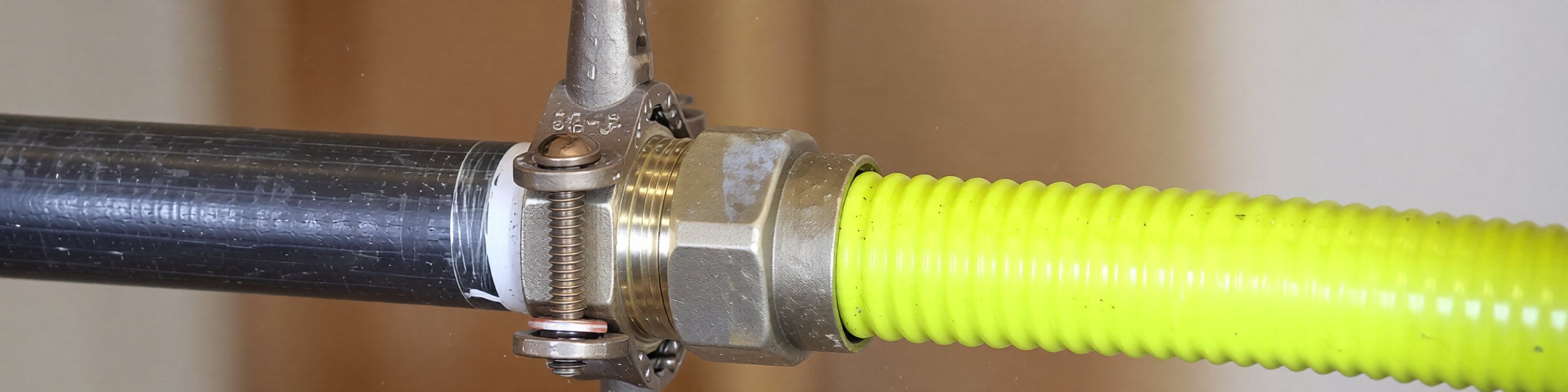
CSST stands for Corrugated Stainless Steel Tubing. It's a flexible, corrugated metal pipe used to run natural gas or propane through a building, instead of rigid black iron pipe. It's faster to install, bends around obstacles, and has become extremely common in new construction and renovations.
CSST comes in two general types:
- Standard CSST — usually identified by a yellow protective jacket.
- Arc-resistant CSST — usually identified by a black protective jacket, engineered with an upgraded jacket system specifically designed to resist electrical arcing.
Why bonding matters at all
"Bonding" means connecting a metal system — in this case, the gas piping — to the building's electrical grounding system, so that if the piping is ever accidentally energized (most commonly from a nearby lightning strike), that energy has a safe path to ground instead of being trapped in the pipe.
This matters more for CSST than for rigid black iron pipe because CSST's corrugated wall is thinner. If enough voltage builds up on the tubing, an electrical arc can burn straight through the corrugated wall in a fraction of a second. If that happens on a gas line, the result can be a gas leak ignited by the same arc that caused it — a serious fire hazard documented in real incidents.
The Canadian gas code (CSA B149.1, in the section on appliance and piping bonding) addresses this directly and treats standard and arc-resistant CSST differently.
Standard (yellow) CSST: bonded twice
From a practical standpoint, standard CSST ends up being bonded in two separate ways:
1. The general bond.
Any metal gas piping system in a building — CSST or rigid pipe — is expected to be electrically bonded as part of ordinary electrical code practice. This typically happens automatically once the piping is connected to an appliance that's plugged into a properly grounded electrical circuit. This is the baseline bonding that applies to gas piping generally, regardless of material.
2. The dedicated CSST bond.
On top of that baseline, standard CSST requires an additional, separate bonding conductor. This extra bond typically involves:
- A bonding clamp attached to a rigid part of the piping system (a length of rigid pipe or a rigid fitting) — never clamped directly onto the corrugated tubing itself, since that can damage the tubing wall.
- A dedicated conductor running from that clamp directly to the building's electrical grounding system — the same ground point the electrical panel uses.
- Specific requirements about where along the piping run this connection needs to be made
This second bond exists solely to provide a low-resistance escape route for any stray electrical energy before it can arc through the thin corrugated wall.
Arc-resistant (black) CSST: bonded once
Arc-resistant CSST is built with a jacket system that's specifically tested and certified to resist arcing damage. Because the tubing itself is designed to handle this risk, the code allows the second, dedicated bonding conductor to be skipped.
In practice, arc-resistant CSST only requires the general bond — the same baseline bonding that applies to gas piping systems. No separate clamp-and-conductor system is required beyond that.
The takeaway
Standard (yellow) CSST | Arc-resistant (black) CSST | |
General/baseline bond | Required | Required |
Extra dedicated CSST bonding conductor | Required | Not required |
Practical bond count | Two | One |
A common misconception worth clearing up
Because arc-resistant CSST doesn't need that extra dedicated bonding conductor, it's easy to hear "no additional bonding required" and mistakenly conclude that arc-resistant CSST needs no bonding at all. That's not correct.
Arc-resistant CSST still has to meet the general baseline bond that applies to gas piping systems generally — it's only the second, dedicated CSST-specific bonding step that gets waived, not bonding altogether. Skipping bonding entirely on the assumption that the black jacket "handles it" is a good way to fail an inspection, or worse, leave a system without the ground-fault protection it's still required to have.
A few things worth remembering
- Always follow the manufacturer's installation instructions. Bonding conductor sizing, clamp types, and exact attachment points vary by product, and the code generally defers to those instructions.
- Never clamp a bonding conductor onto the corrugated section of CSST itself — always onto a rigid pipe segment or fitting.
- Local requirements can be stricter than the general code. Always check with the authority having jurisdiction (your local gas inspector) before finalizing an installation, since editions of the code and local amendments do get updated.
- CSST bonding should be installed and verified by a qualified, certified gas fitter or electrician — this isn't a DIY safety item.
Whether you're a homeowner trying to understand what your inspector is asking for, or a technician double-checking a job, the core idea is simple: standard CSST needs an extra safety net because of how it's built, and arc-resistant CSST was engineered specifically so it doesn't need that same net.


