
What Makes a -54°C Air Brake Hose Outperform a -40°C Hose in Extreme Cold?
When it comes to commercial vehicle safety, reliability in extreme temperatures is non-negotiable—especially for components like air brake hoses. If you’ve ever compared SAE J1402 rubber air brake hoses, you’ve probably noticed two common low-temperature ratings: -40°C and -54°C. But what exactly makes the -54°C hose more cold-resistant than its -40°C counterpart?
Let’s take a closer look at the material science behind the difference—and why it matters.
The Role of EPDM in Air Brake Hoses
Both the -40°C and -54°C hoses typically use EPDM (Ethylene Propylene Diene Monomer) rubber. This synthetic rubber is widely recognized for its exceptional resistance to heat, ozone, weathering, and ageing—making it a preferred material for air brake applications.
However, not all EPDM is created equal.
What’s Different About “Low-Temperature EPDM”?
The key distinction lies in the formulation of the rubber compound used in the -54°C hose, often referred to as low-temperature EPDM. Here’s what’s changed:
ü Modified Polymer Structure
Low-temp EPDM uses a specially engineered polymer base with a lower glass transition temperature (Tg). The glass transition temperature is the point where rubber shifts from a flexible state to a brittle one. By lowering Tg, the rubber remains flexible and crack-resistant at lower temperatures.
ü Optimized Plasticizers
The -54°C formulation includes low-volatility plasticizers that don’t stiffen up or evaporate as quickly in freezing conditions. These plasticizers maintain the hose’s softness and flexibility without sacrificing performance at extreme lows.
ü Tailored Filler and Cure System
The filler system (such as carbon black or silica) and the curing agents are also adjusted in low-temp EPDM. This enhances cold-weather elasticity while maintaining the necessary strength and abrasion resistance expected from SAE J1402-compliant hoses.
Why It Matters: Performance in the Real World
When temperatures plunge below -40°C, a standard EPDM hose starts to lose flexibility. It becomes more prone to:
· Cracking during operation
· Stiffness that causes fitting issues
· Reduced impact resistance
On the other hand, a -54°C low-temp EPDM hose retains pliability, durability, and sealing ability, making it ideal for:
· Northern climates [Winnipeg registered 12 days lower than 30 degrees Celsius in Winter 2024]
· High-altitude transport routes
· Fleets operating year-round in harsh winters
Quick Comparison: -40°C vs -54°C Hoses
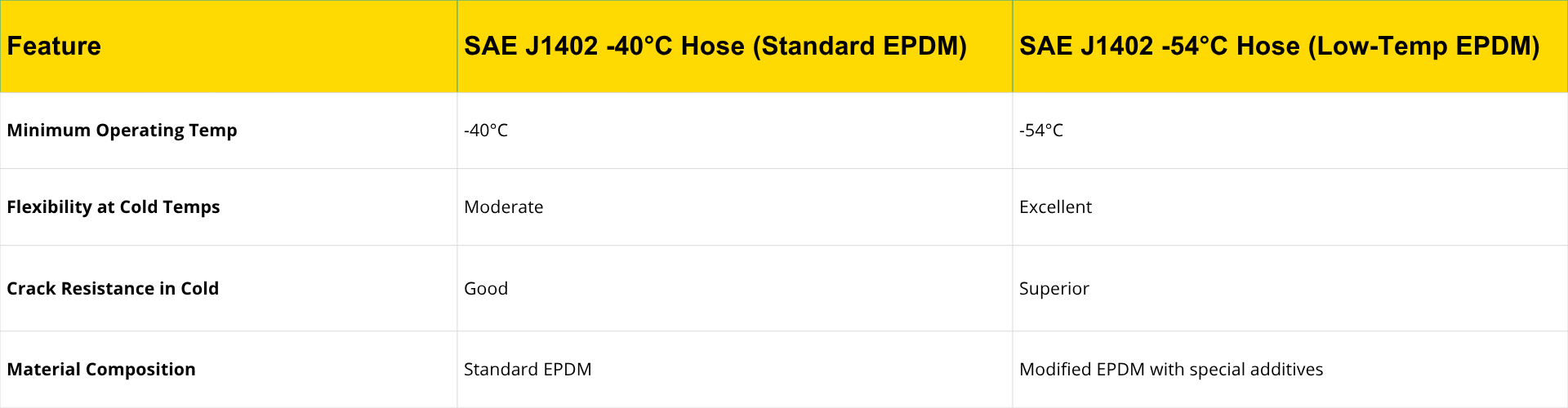
Feature | SAE J1402 -40°C Hose (Standard EPDM) | SAE J1402 -54°C Hose (Low-Temp EPDM) |
Minimum Operating Temp | -40°C | -54°C |
Flexibility at Cold Temps | Moderate | Excellent |
Crack Resistance in Cold | Good | Superior |
Material Composition | Standard EPDM | Modified EPDM with special additives |
Final Thoughts
While both hoses meet the SAE J1402 standard for air brake performance, the -54°C low-temperature EPDM hose is engineered specifically for cold-weather reliability. The difference lies in the rubber chemistry, designed to beat the brittleness and stiffness that can compromise brake systems in extreme conditions.
If your fleet operates in severe winter environments, upgrading to -54°C hoses isn’t just a performance choice—it’s a safety one. Call your Fairview Branch for more information on our Arctic Airbrake assemblies.
What Makes a -54°C Air Brake Hose Outperform a -40°C Hose in Extreme Cold?
When it comes to commercial vehicle safety, reliability in extreme temperatures is non-negotiable—especially for components like air brake hoses. If you’ve ever compared SAE J1402 rubber air brake hoses, you’ve probably noticed two common low-temperature ratings: -40°C and -54°C. But what exactly makes the -54°C hose more cold-resistant than its -40°C counterpart?
Let’s take a closer look at the material science behind the difference—and why it matters.
The Role of EPDM in Air Brake Hoses
Both the -40°C and -54°C hoses typically use EPDM (Ethylene Propylene Diene Monomer) rubber. This synthetic rubber is widely recognized for its exceptional resistance to heat, ozone, weathering, and ageing—making it a preferred material for air brake applications.
However, not all EPDM is created equal.
What is Different About "Low-Temperature EPDM"?
The key distinction lies in the formulation of the rubber compound used in the -54°C hose, often referred to as low-temperature EPDM. Here’s what’s changed:
 Modified Polymer Structure
Low-temp EPDM uses a specially engineered polymer base with a lower glass transition temperature (Tg). The glass transition temperature is the point where rubber shifts from a flexible state to a brittle one. By lowering Tg, the rubber remains flexible and crack-resistant at lower temperatures.
 Optimized Plasticizers
The -54°C formulation includes low-volatility plasticizers that don’t stiffen up or evaporate as quickly in freezing conditions. These plasticizers maintain the hose’s softness and flexibility without sacrificing performance at extreme lows.
 Tailored Filler and Cure System
The filler system (such as carbon black or silica) and the curing agents are also adjusted in low-temp EPDM. This enhances cold-weather elasticity while maintaining the necessary strength and abrasion resistance expected from SAE J1402-compliant hoses.
Why It Matters: Performance in the Real World
When temperatures plunge below -40°C, a standard EPDM hose starts to lose flexibility. It becomes more prone to:
- Cracking during operation
- Stiffness that causes fitting issues
- Reduced impact resistance
On the other hand, a -54°C low-temp EPDM hose retains pliability, durability, and sealing ability, making it ideal for:
- Northern climates [Winnipeg registered 12 days lower than 30 degrees Celsius in Winter 2024]
- High-altitude transport routes
- Fleets operating year-round in harsh winters
Quick Comparison: -40°C vs -54°C
Final Thoughts
While both hoses meet the SAE J1402 standard for air brake performance, the -54°C low-temperature EPDM hose is engineered specifically for cold-weather reliability. The difference lies in the rubber chemistry, designed to beat the brittleness and stiffness that can compromise brake systems in extreme conditions.
If your fleet operates in severe winter environments, upgrading to -54°C hoses isn’t just a performance choice—it’s a safety one. Call your Fairview Branch for more information on our Arctic Airbrake assemblies.


