

How Propane Regulators Work: A Complete Guide
Propane systems rely on precision, safety, and consistent performance—and at the center of it all is the propane regulator. Whether you're working with residential heating, commercial applications, or industrial LP gas systems, understanding how regulators function is essential for safe and efficient operation.
In this guide, we break down how propane regulators work, the several types available, and how to choose the right one for your application.
What Is a Propane Regulator?
A propane regulator is a critical component designed to control and reduce the pressure of propane gas as it flows from the storage tank to downstream equipment.
Propane is stored in tanks at high pressure, which can vary depending on temperature and tank conditions. However, most appliances and systems require gas at a much lower, consistent pressure to operate safely. The regulator ensures that this pressure is reduced and stabilized before the gas reaches the end-use equipment.
Without a properly functioning regulator, propane systems would be unsafe, inefficient, and prone to failure.
How Does a Propane Regulator Work?
At a basic level, a propane regulator works by balancing forces to maintain a steady outlet pressure.
Inside the regulator, there are three key components:
1. Inlet (High-Pressure Side)
This is where propane enters the regulator directly from the tank. At this stage, the gas is under high and often variable pressure.
2. Diaphragm and Spring Mechanism
The diaphragm is a flexible membrane that responds to pressure changes. It works in combination with a calibrated spring to regulate flow:
- When downstream demand increases, pressure drops
- The diaphragm moves, opening the valve to allow more gas through
- As pressure builds back up, the diaphragm closes the valve to maintain balance
This constant adjustment ensures consistent pressure output, even as demand fluctuates.
3. Outlet (Low-Pressure Side)
The regulated propane exits the regulator at a controlled pressure suitable for appliances or systems.
Types of Propane Regulators
Choosing the right regulator depends on your system design and pressure requirements. The most common types include:
Single-Stage Regulators
- Reduce pressure in one step
- Typically used for smaller or less complex systems
- Best suited for applications with stable demand
Twin-Stage/Two-Stage Regulators
- Reduce pressure in two steps (high → intermediate → low)
- Provide more consistent pressure control
- Ideal for residential, commercial, and high-demand systems
High-Pressure Regulators
- Designed for applications requiring higher outlet pressure
- Common in industrial settings or specialized equipment
Why Proper Pressure Regulation Matters
A carefully selected and installed propane regulator ensures:
- Safety – Prevents over-pressurization and potential hazards
- Efficiency – Maintains optimal appliance performance
- Equipment Longevity – Reduces wear on downstream components
- Consistent Operation – Eliminates pressure fluctuations
Inconsistent pressure can lead to issues like poor combustion, system shutdowns, or even equipment damage.
How to Choose the Right Propane Regulator
Selecting the correct regulator involves several key factors:
1. System Pressure Requirements
Ensure the regulator delivers the correct outlet pressure for your equipment.
2. Flow Capacity
Choose a regulator that can handle the total BTU demand of your system.
3. Application Type
Residential, commercial, and industrial systems all have different requirements.
4. Environmental Conditions
In colder climates, regulators must perform reliably in low temperatures—something especially important in Canadian applications.
5. Compliance and Certification
Always select regulators that meet relevant safety standards, such as CSA or UL certifications.
Best Practices for Installation and Maintenance
To ensure optimal performance and safety:
- Install regulators according to manufacturer guidelines
- Position them with proper vent orientation
- Protect them from debris, moisture, and physical damage
- Perform regular inspections as part of system maintenance
- Replace regulators periodically based on usage and environment
- Replace regulators immediately if any visible leaks are present
Conclusion
Propane regulators play a vital role in maintaining safe, efficient, and reliable gas systems. By reducing high tank pressure to a controlled, usable level, they protect both equipment and users while ensuring consistent performance.
Understanding how these components work—and selecting the right one for your application—can significantly improve system reliability and safety.
For a full range of high-quality propane regulators and valves designed for demanding applications, explore Fairview’s product offerings and speak with our team to find the right solution for your needs.
How Propane Regulators Work: A Complete Guide
Propane systems rely on precision, safety, and consistent performance—and at the center of it all is the propane regulator. Whether you're working with residential heating, commercial applications, or industrial LP gas systems, understanding how regulators function is essential for safe and efficient operation.
In this guide, we break down how propane regulators work, the several types available, and how to choose the right one for your application.
What Is a Propane Regulator?
A propane regulator is a critical component designed to control and reduce the pressure of propane gas as it flows from the storage tank to downstream equipment.
Propane is stored in tanks at high pressure, which can vary depending on temperature and tank conditions. However, most appliances and systems require gas at a much lower, consistent pressure to operate safely. The regulator ensures that this pressure is reduced and stabilized before the gas reaches the end-use equipment.
Without a properly functioning regulator, propane systems would be unsafe, inefficient, and prone to failure.
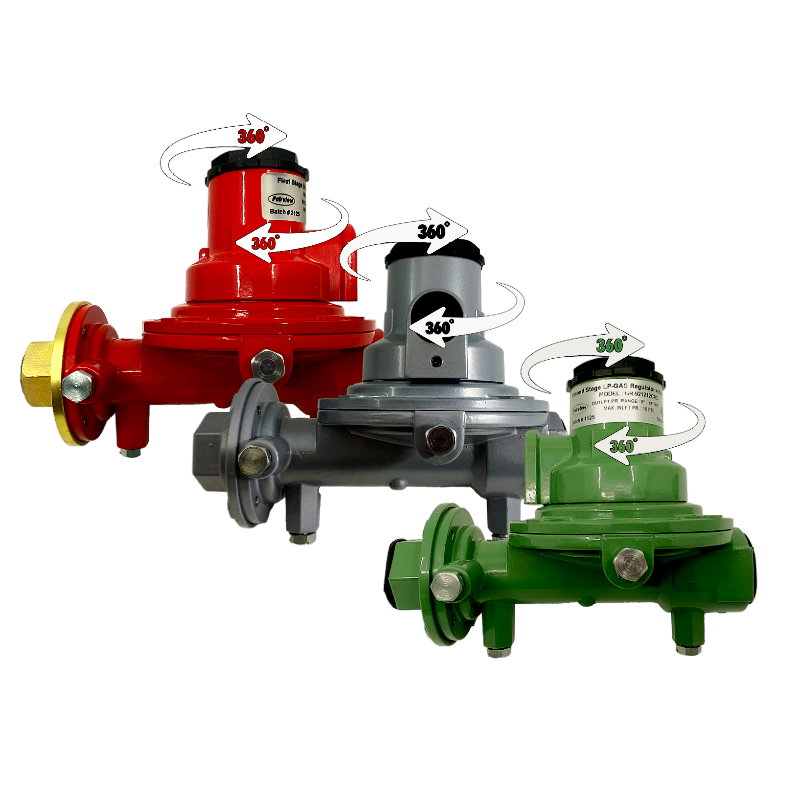
How Does a Propane Regulator Work?
At a basic level, a propane regulator works by balancing forces to maintain a steady outlet pressure.
Inside the regulator, there are three key components:
1. Inlet (High-Pressure Side)
This is where propane enters the regulator directly from the tank. At this stage, the gas is under high and often variable pressure.
2. Diaphragm and Spring Mechanism
The diaphragm is a flexible membrane that responds to pressure changes. It works in combination with a calibrated spring to regulate flow:
- When downstream demand increases, pressure drops
- The diaphragm moves, opening the valve to allow more gas through
- As pressure builds back up, the diaphragm closes the valve to maintain balance
This constant adjustment ensures consistent pressure output, even as demand fluctuates.
3. Outlet (Low-Pressure Side)
The regulated propane exits the regulator at a controlled pressure suitable for appliances or systems.
Types of Propane Regulators
Choosing the right regulator depends on your system design and pressure requirements. The most common types include:
Single-Stage Regulators
- Reduce pressure in one step
- Typically used for smaller or less complex systems
- Best suited for applications with stable demand
Twin-Stage/Two-Stage Regulators
- Reduce pressure in two steps (high → intermediate → low)
- Provide more consistent pressure control
- Ideal for residential, commercial, and high-demand systems
High-Pressure Regulators
- Designed for applications requiring higher outlet pressure
- Common in industrial settings or specialized equipment
Why Proper Pressure Regulation Matters?
A carefully selected and installed propane regulator ensures:
- Safety – Prevents over-pressurization and potential hazards
- Efficiency – Maintains optimal appliance performance
- Equipment Longevity – Reduces wear on downstream components
- Consistent Operation – Eliminates pressure fluctuations
Inconsistent pressure can lead to issues like poor combustion, system shutdowns, or even equipment damage.
How to Choose the Right Propane Regulator
Selecting the correct regulator involves several key factors:
1. System Pressure Requirements
Ensure the regulator delivers the correct outlet pressure for your equipment.
2. Flow Capacity
Choose a regulator that can handle the total BTU demand of your system.
3. Application Type
Residential, commercial, and industrial systems all have different requirements.
4. Environmental Conditions
In colder climates, regulators must perform reliably in low temperatures—something especially important in Canadian applications.
5. Compliance and Certification
Always select regulators that meet relevant safety standards, such as CSA or UL certifications.
Best Practices for Installation and Maintenance
To ensure optimal performance and safety:
- Install regulators according to manufacturer guidelines
- Position them with proper vent orientation
- Protect them from debris, moisture, and physical damage
- Perform regular inspections as part of system maintenance
- Replace regulators periodically based on usage and environment
- Replace regulators immediately if any visible leaks are present
Conclusion
Propane regulators play a vital role in maintaining safe, efficient, and reliable gas systems. By reducing high tank pressure to a controlled, usable level, they protect both equipment and users while ensuring consistent performance.
Understanding how these components work—and selecting the right one for your application—can significantly improve system reliability and safety.
For a full range of high-quality propane regulators and valves designed for demanding applications, explore Fairview’s product offerings and speak with our team to find the right solution for your needs.


